Shenzhen Industrial Software Park: 80% resumption, 60+ firms on track

    03 16, 2026

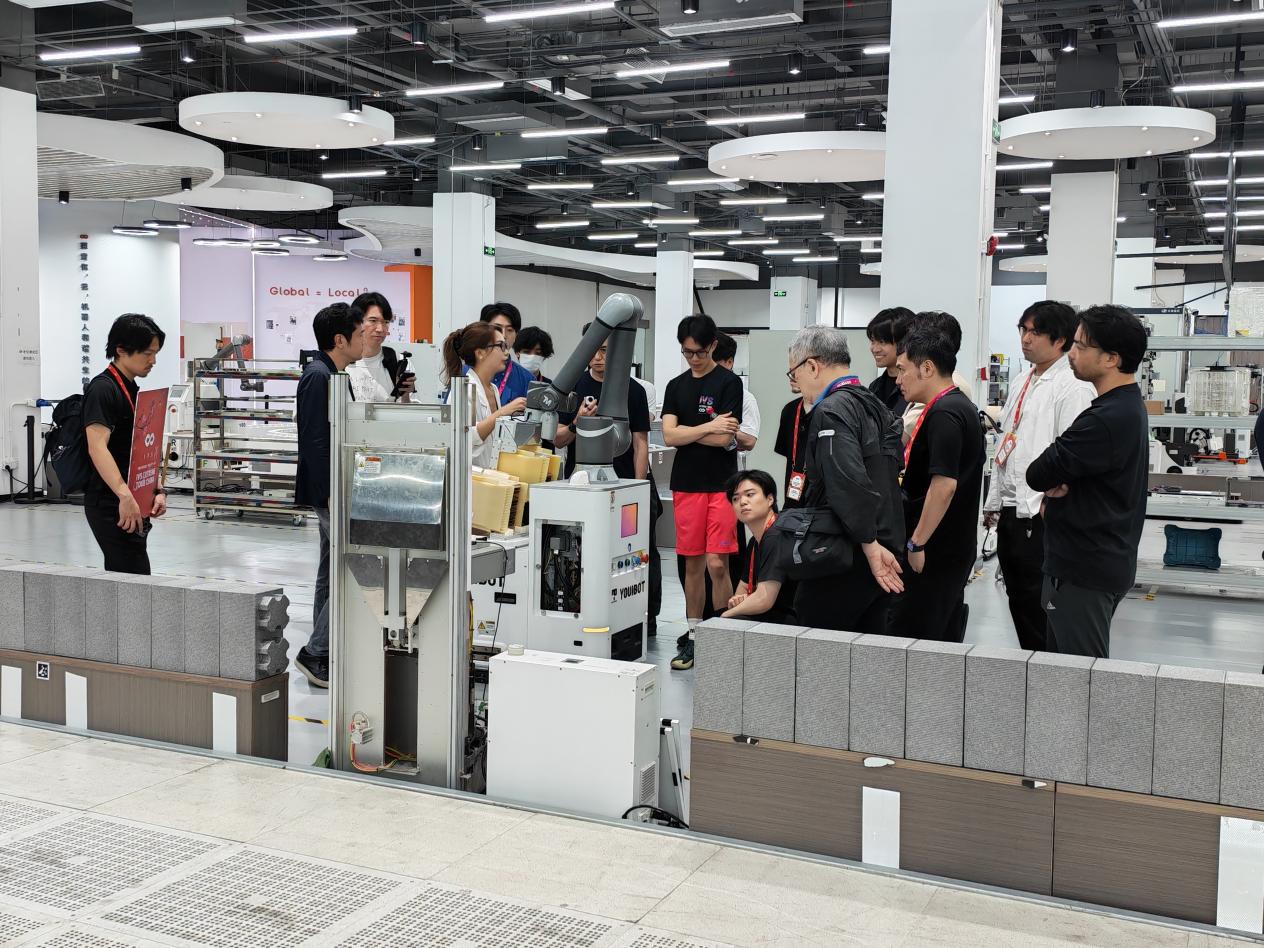
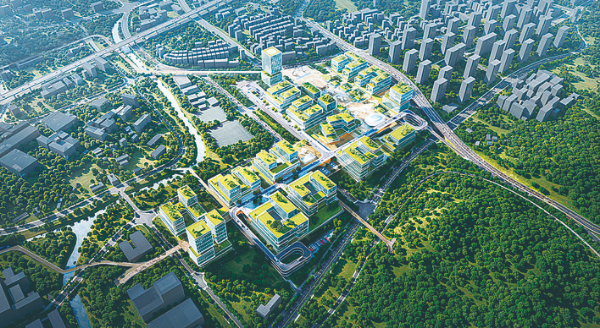
    Shenzhen Industrial Software Park in Longgang district had resumed operations at over 80 percent capacity by early March, with more than 60 enterprises ramping up production to secure robust first-quarter growth.As a key provincial and municipal project, the park covers 5.6 hectares of land and has a total construction area of 26 hectares. It focuses on industrial software, the HarmonyOS ecosystem, and artificial intelligence, aiming to become a leading national software park for HarmonyOS Native Applications. The park has established a comprehensive support system and set up several platforms, including a new-quality-productivity empowerment center, to provide one-stop services for its tenants.Supported by preferential rental policies and a dedicated industrial software fund, the park has attracted firms such as i3Yoo Technology and POISSONSOFT. More than 80 percent are software and information service firms, and 70 percent are industrial software enterprises."We chose to settle here because of the concentration of industrial resources and the complete supply chain, which helps us expand our business and connect with clients," said Zeng Xiang, chief technology officer of China Auto Software, a firm focused on independent R&D of automotive industrial software.By 2027, the park plans to host over 100 enterprises, with combined annual revenue exceeding 2.5 billion yuan ($362.5 million), helping strengthen Shenzhen’s role as a global hub for industrial tech innovation.

    Basketball and soccer leagues to take Guangdong by storm

    03 16, 2026

    Two major sporting events have been scheduled for 21 cities across southern China's Guangdong province, authorities announced on Saturday.The Guangdong Basketball League (Guangdong BA) and the Guangdong Soccer Super League will boast a lineup which will be divided into two major regions – 11 teams in the eastern part of the Pearl River and 10 in the river's western area.With them setting records in terms of breadth of participation in Guangdong's basketball and soccer competitions, the tournaments are also aiming to become some of the largest provincial leagues in the country.The top two teams from each region will directly advance to the quarterfinals, while teams ranked 3rd to 6th in each region will face off against their counterparts from the other region to determine the remaining four spots in the quarterfinals.In terms of player eligibility, the events emphasize a strong grassroots nature and local representation. Players are generally expected to have a strong connection to the city they represent, with restrictions on professional athletes participating.The minimum age for players in both events is set at 16, allowing teenagers the opportunity to compete alongside adults and bridging the gap in talent development. The upper age limit for participants is extended to 40 and 45 years, respectively, enabling veteran players to continue representing their home cities.The basketball league will begin in Guangzhou, the provincial capital city, on March 21, while the soccer league, with 123 matches during the competition, is scheduled for late April.The basketball league offers tickets at two prices – 8.8 yuan ($1.28) and 18.8 yuan for each regular match. Tickets are priced at 8.8 yuan for each soccer match.

    Guangdong remains at forefront of opening-up

    03 13, 2026

    Guangdong will further deepen reform and opening-up, expand domestic and international engagement, and seize opportunities from the development of the Guangdong-Hong Kong-Macao Greater Bay Area to accelerate the building of a dynamic, internationally competitive, first-class bay area and world-class urban cluster, deputies to the National People's Congress said.During the 15th Five-Year Plan (2026-30) period, Guangdong will advance comprehensive socioeconomic development and forge a new model for Chinese modernization, NPC deputies from the province said during a group deliberation on Friday.In recent years, Guangdong has pursued a dual-strength strategy to promote industrial and technological advancement while accelerating the development of new productive forces to drive economic growth to new heights, said Huang Kunming, Party secretary of Guangdong province and a deputy to the 14th NPC.R&D intensity in Guangdong has reached 3.6 percent across all sectors, fostering multiple trillion-yuan industrial clusters, while the core artificial intelligence industry has grown to 300 billion yuan ($43.5 billion) in recent years, Huang said.Looking ahead to the 15th Five-Year Plan (2026-30), the province will promote deeper integration between technological and industrial innovation and foster coordinated development between manufacturing and services, striving to cultivate more trillion — and multi-trillion-yuan industrial clusters in emerging fields such as 6G, the low-altitude economy, embodied intelligence and quantum technology, he said.Building on the successful joint hosting of the 15th National Games and the National Paralympic and Special Olympic Games with Hong Kong and Macao last year, Guangdong will further strengthen cooperation among the three regions to accelerate development of a dynamic, internationally competitive world-class bay area and global urban cluster, Huang said."Through years of close collaboration between Guangdong and Macao, both tangible and intangible conditions have steadily matured," he said. "With abundant advantages, ample opportunities and vast potential, Guangdong will vigorously advance development of the Guangdong-Macao In-Depth Cooperation Zone in Hengqin."Guangdong is home to the country's largest population, highest economic output, greatest number of market entities and the widest range of application scenarios, said Guangdong governor Meng Fanli, also a deputy to the 14th NPC.During the 15th Five-Year Plan (2026-30) period, Guangdong will prioritize high-quality development of its service sector to drive industrial and economic growth while supporting the advancement of manufacturing, Meng said, adding that the province will accelerate large-scale growth of the service industry.Guangdong will also advance its international development, leveraging opportunities from the APEC Economic Leaders' Meeting to be hosted in Shenzhen in November to further open its service sector and promote the growth, upgrading and strengthening of service trade, Meng said.Shenzhen mayor Qin Weizhong, also a 14th NPC deputy, said the city is accelerating its development into a globally influential economic center and modern international metropolis.Shenzhen will upgrade its international infrastructure and capabilities, broaden global partnerships, and strengthen cooperation in artificial intelligence, new energy and green transformation, offering the "Shenzhen Solution" to promote shared prosperity across the Asia-Pacific, Qin said."The APEC meeting will provide powerful momentum for Shenzhen to deepen reform and opening-up and advance innovation-driven development," he said. "It will strengthen the city's global presence, enhance its competitiveness and innovation capacity, and accelerate its emergence as a world-class city."

    Service sector opening-up to benefit firms

    03 13, 2026

    China's renewed push to broaden high-standard opening-up in the service sector will create more opportunities for multinational companies during the 15th Five-Year Plan (2026-30) period, as policymakers signaled further reforms to improve the business environment and advance the country's economic transformation.Market watchers and corporate executives said these efforts point to greater market access and a more predictable regulatory framework, allowing global businesses to deepen their presence.China's value-added services output went up 5.4 percent year-on-year to 80.89 trillion yuan ($11.78 trillion) in 2025, with the sector contributing 61.4 percent to the country's overall economic growth, data from the National Bureau of Statistics showed.According to the Government Work Report submitted last week to the fourth session of the 14th National People's Congress, China's top legislature, the nation will expand market access and open up more areas, particularly in the service sector.Zhu Jiandi, a deputy to the 14th NPC and managing partner of international accounting firm BDO in China, said that making expansion of service sector opening-up a development priority in the 15th Five-Year Plan period has multiple implications."When manufacturing approaches saturation, advanced economies display a shift toward services," said Zhu, adding that shifting from selling goods to selling services can boost GDP and upgrade manufacturing through producer services, such as finance and innovation.As digital technologies accelerate industrial upgrade and integrate deeply with advanced manufacturing in China, these moves will further attract foreign technology service providers and encourage broader participation in the country's "Invest in China" initiative, said Wei Xiang, a researcher at the Chinese Academy of Social Sciences in Beijing.China's service sector attracted 64.04 billion yuan in foreign direct investment in January, with foreign investment in research and development and design services soaring 175.1 percent year-on-year, statistics from the Ministry of Commerce showed.Commerce Minister Wang Wentao, while speaking at a news conference on the sidelines of the fourth session of the 14th NPC on Friday, said that China will promote imports of high-quality consumer services, including medical and healthcare services, as the country moves to vigorously develop trade in services.Amid these policy efforts, Sherri He, China unit managing director of Kearney, a United States-based management consulting firm, said that professional services can play a key role in this transition.Global consulting firms are helping companies combine international brand assets with local consumer insights, enabling them to better understand the evolving "language of emotional value" among Chinese consumers and build stronger connections with the market, she noted.Wu Dongming, CEO for China at DHL Express, the German logistics service provider, said that more consumers in China's lower-tier cities are gaining access to international goods and services comparable in quality to those in top-tier cities."At the same time, manufacturers in these small cities and counties are increasingly gaining the capability to participate directly in global trade," Wu said.Roberta Lipson, director of the US-China Business Council and founder of United Family Healthcare, said she believes that China's economic potential lies in leveraging innovation in the new economy to drive services and industrial development.

    Longgang helps global AI developers launch at 'zero cost'

    03 11, 2026

    OpenClaw, an open-source AI agent platform with a red lobster mascot, is shown on a mobile device.Longgang released a draft policy package on March 7 to boost the development of the open-source AI project OpenClaw, nicknamed the "Lobster 10" for its red lobster-shaped logo. The initiative aims to attract global AI developers and solo entrepreneurs with a zero-cost startup support package.OpenClaw is an AI platform that connects large models and instant messaging tools via a unified gateway, allowing users to command AI to complete tasks through natural language in WeChat, Feishu and other daily chat apps. The open-source project has garnered more than 260,000 stars on GitHub.The 10 supportive measures target both OpenClaw developers and solo entrepreneurs and offer a raft of incentives. Eligible developers can enjoy free deployment services, access to de-identified public data in sectors such as low-altitude economy and intelligent transport, and a 50 percent subsidy for data services. Enterprises contributing key code to top international AI communities can receive up to 2 million yuan ($290,800) in subsidies.Solo startups will get three months of free computing power, a 30 percent subsidy for large model usage capped at 1 million yuan annually, and preferential office space. Talents can obtain up to 100,000 yuan in settlement subsidies and free temporary accommodation. High-quality seed projects are eligible for up to 10 million yuan in equity investment, with additional support for overseas expansion.The draft measures are scheduled to take effect in 2026 and are now open for public feedback, according to Longgang Artificial Intelligence and Robotics Authority.