Huawei launches HarmonyOS-powered campus network

    05-20,2026

    The Longgang International Art Center in Shenzhen, the first fully integrated intelligent "Harmony Theater", powered by Huawei's Wi-Fi 7 and HarmonyOS technologies. Huawei launched its next-generation Xinghe AI campus network products featuring open-source HarmonyOS at its 2026 Xinghe AI Network Business Summit in Shenzhen's Longgang district on May 18, marking the debut of its HarmonyOS-integrated campus network portfolio for the AI era.The new solution combines Wi-Fi 7 with open-source HarmonyOS and AI capabilities, allowing for intelligent, secure campus networks across sectors including education, healthcare, retail and manufacturing. The company also unveiled the "Star Cloud Plan 2026" to accelerate smart campus adoption.A centerpiece of the summit was the Longgang International Art Center, which was revealed as the nation's first fully integrated intelligent "Harmony Theater." The venue integrates Wi-Fi 7 with integrated sensing, AI-powered operations and over 20 HarmonyOS services covering ticketing, navigation and visitor management.The system has reduced energy consumption by over 15 percent and improved operational efficiency by 30 percent through its intelligent operations platform."The combination of AI and HarmonyOS brings three fundamental changes: seamless connectivity across all devices, proactive services, and green operations with real-time carbon emission monitoring," said Wu Zhaohui, CTO of the center.Huawei showcases its new Xinghe AI campus network solutions at the 2026 Xinghe AI Network Business Summit in Shenzhen on May 18. Huawei executives noted that as AI moves from chat applications to practical tasks, the demand for higher bandwidth and lower latency in networks is accelerating, while the open-source HarmonyOS ecosystem, now supported as a national strategy, provides a unified digital foundation across devices and industries.

    China makes tax refunds easier for foreign visitors

    05-19,2026

    A tax free sign seen in Shanghai. YIN LIQIN/CHINA NEWS SERVICEChina unveiled on Monday a new package of measures to make tax refunds easier for foreign visitors, as Beijing seeks to stimulate inbound consumption and support the recovery of international travel.The policy, jointly issued by the Ministry of Commerce and five other government bodies, including the Ministry of Finance and the State Taxation Administration, outlines eight steps aimed at improving the country's departure tax refund system for overseas travelers.The measures upgrade an earlier policy released in 2025 and are designed to make the process "more convenient, faster and easier" for foreign shoppers, according to an official notice.A key component of the plan is expanding the number of tax refund stores. Authorities will encourage more eligible retailers to register as tax refund outlets and optimize their geographic distribution, particularly in areas with high concentrations of international visitors such as major shopping districts, tourist attractions, markets and ports of entry.Local governments are also encouraged to ensure that tax refund services are widely available in key commercial zones and travel destinations.Starting from July 1, China will introduce a random inspection system for smaller refund claims. Refund applications involving purchases of less than 10,000 yuan ($1,380) will be subject to spot checks rather than mandatory physical inspection of goods, while applications at or above that threshold will continue to require full verification.Officials say the change is intended to speed up processing for most travelers while maintaining regulatory oversight.The notice also calls for improvements to the country's "buy-and-refund-immediately" scheme, which allows foreign visitors to receive tax refunds directly at participating stores instead of waiting until departure. Under the new policy, authorities will promote cross-regional recognition of the service so that tourists who receive instant refunds at the point of purchase can complete final verification at a different departure port.In addition, the time limit for completing departure procedures under the instant refund program will be standardized nationwide at 28 days.China will also push forward paperless processing for tax refunds. From July 1, customs authorities and tax refund agencies will be allowed to verify refund application forms and sales invoices online, enabling the entire refund procedure to be handled digitally.Officials also plan to set up dedicated tax refund service areas at major trade exhibitions, including the China International Import Expo, the China Import and Export Fair and the China International Consumer Products Expo, to facilitate purchases and refund services for overseas buyers attending the events.Beyond procedural changes, the policy also aims to improve the overall consumption environment for international visitors. Cities designated as international consumption hubs or pilot zones for globalized retail environments are encouraged to expand tax refund services, improve payment convenience and build globally competitive shopping districts.Authorities also pledged to promote additional international passenger flights to make travel to China easier for overseas visitors.The policy comes as China steps up efforts to revive inbound tourism and cross-border consumption, while positioning retail spending by international travelers as a new source of growth for the country's consumer economy.Government agencies will also strengthen overseas promotion of China's tax refund policies as part of a broader campaign to build the "Shopping in China" brand and attract more international shoppers, the notice said.

    Robot-run restaurant in Longgang turns dining into tech experience

    05-14,2026

    A restaurant where robots handle everything from greeting guests to cooking and serving has become Shenzhen's newest attraction since opening during the May Day holiday in Longgang district.The three welcoming robots at the "WALL-E and EVA" human-robot collaborative restaurant.The "WALL-E and EVA" human-robot collaborative restaurant, located in the world's first robot 6S store, deploys over a dozen robots performing distinct roles.Humanoid robots welcome diners at the entrance and even dance on request, while a robotic chef stir-fries dishes on a programmed routine as human assistants prepare ingredients. Wheeled robots then transport meals to tables, where server robots deliver them to customers."The food tastes especially good because a robot made it," said Shell, a tourist visiting from the United Kingdom.A robot at the "WALL-E and EVA" human-robot collaborative restaurant serves dishes to customers.The restaurant is part of Longgang's broader push to build China's first "embodied intelligent robot demonstration block" in the Bantian GALAXY WORLD area.The district has already established the world's first AI 6S store and robot 6S store, alongside robot retail and unmanned food delivery services, forming an integrated tech-driven consumption ecosystem.The restaurant has been operating at full capacity since its launch. Operators say they aim to develop fully autonomous robot-run dining establishments in the future as the technology matures.

    Longgang to unveil AIGC strength at 22nd China (Shenzhen) ICIF

    05-13,2026

    An exhibit from a previous edition of the China (Shenzhen) International Cultural Industries Fair.Twenty-nine enterprises from Longgang district of Shenzhen will participate in the 22nd China (Shenzhen) International Cultural Industries Fair (ICIF), running from May 21 to 25 at the Shenzhen World Exhibition and Convention Center.Longgang will feature a 360-square-meter exhibition area focused on building an AIGC (artificial intelligence generated content) industry hub, which aligns with the district's "All in AI" strategy.Exhibitors, including Visual China Group and Shanghai Film Shenzhen, will showcase their achievements in AI-powered intellectual property development and AI comic series.The landmark of Longgang Digital Creative Corridor.The fair is expected to attract over 3,300 cultural enterprises and institutions offline,  as well as 300-plus overseas exhibitors from 65 countries and regions. A total of 51 sub-venues citywide will host nearly 400 supporting events.The booth of Longgang district at the Cultural Industry Innovation Exhibition of the Guangdong-Hong Kong-Macao Greater Bay Area.Longgang will operate nine sub-venues featuring a total of 50 events. Highlights include upgrades in digital oil painting at Dafen Oil Painting Village, an AI model for jade carving at Sanlian Crystal and Jade Culture Village, and showcases of AI visual innovation at Tjianyuntu BIM Industrial Park.There will also be exhibitions on computing power and cultural integration at DCC Cultural and Creative Park. A dedicated investment promotion session is scheduled for May 23 at the main venue.

    Story behind APEC's first youth scholars forum

    05-12,2026

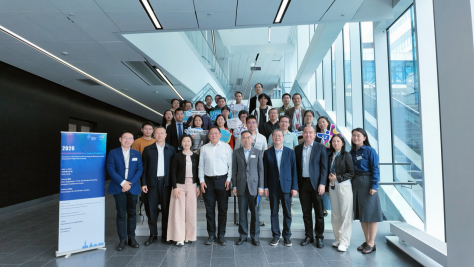
    When the inaugural APEC Study Centers Consortium Youth Scholars Forum convened at the Chinese University of Hong Kong, Shenzhen on May 7-8, it marked the first time in APEC's 37-year history that young scholars were given an independent, systematic platform for dialogue on regional cooperation.The choice of Longgang district as the host location was no coincidence – it reflects a deep alignment between the forum's themes and the district's unique urban character.Young scholars attend the inaugural ‌APEC Study Centers Consortium (ASCC) Youth Scholars Forum‌ at The Chinese University of Hong Kong, Shenzhen in Longgang district on May 7.Innovation is the main reason Longgang was chosen to host the forum. The district’s GDP surpassed 600 billion yuan ($88.32 billion) during the 14th Five-Year Plan period (2020-25), with R&D spending reaching 14.9 percent of GDP – the highest in Shenzhen.Home to the Shenzhen International University Park, which hosts HKUST(GZ)'s sister institution CUHK-Shenzhen and other international universities, the district has become a hub for AI research and tech commercialization. Forum participants toured BYD and the Shenzhen Institute of Artificial Intelligence and Robotics, experiencing firsthand the innovation ecosystem that Longgang offers.The world's first robot 6S store, located in Longgang district.International exchange is another major reason. CUHK-Shenzhen alone brings together over 1,000 international students from 41 countries. The district regularly hosts global cultural events, from the Belt and Road International Music Festival to the Longgang International Art Center, which recently introduced the Verbier Festival. This blend of academic and cultural internationalization made Longgang a natural fit.The opening ceremony of the Longgang International Art Center and the premiere of the Verbier Music Festival in Shenzhen.The district's commitment to youth was also a major selling point. Longgang has implemented a comprehensive support system covering affordable housing, startup loans, career training and free short-term accommodation for job-seeking graduates – precisely the kind of social protection and community belonging that forum participants identified as critical for empowering young people across the Asia-Pacific.