Doubling down on cooperation offers better payout for APEC economies: China Daily editorial

    02 12, 2026

    On Tuesday in Guangzhou, Guangdong province, the opening of the First Asia-Pacific Economic Cooperation 2026 Senior Officials' Meeting offered something that has been in short supply in the global economy lately: a results-oriented conversation about cooperation that is grounded in scale, incentives and realities.Chinese Foreign Minister Wang Yi's keynote speech at the opening session of the meeting was not just a marker of China's return as APEC host after 12 years; it was also a reminder that the Asia-Pacific now sits at a fork in the road that will influence global growth.Start with the numbers. According to APEC's own data, its 21 member economies account for roughly 60 percent of global GDP, about 48 percent of world trade, and nearly 40 percent of the world's population. The World Bank estimates that over the past three decades, the Asia-Pacific has contributed more than half of global growth, lifting hundreds of millions of people out of poverty. Yet the International Monetary Fund now warns that medium-term global growth is likely to hover around 3 percent — well below historical averages — while trade growth remains structurally weaker than before the global financial crisis. Given that context, what happens inside APEC is no longer regional housekeeping; it is macroeconomics on a global scale.Wang's speech squarely addressed the central question: Where is Asia-Pacific development heading in an era threatened by protectionism, unilateralism and economic coercion.The answer is clear that APEC should continue to pursue its original mission of promoting growth and improving people's well-being through open, inclusive development, reaffirming the DNA that has enabled it to thrive since it was founded more than 30 years ago. The Asia-Pacific's diversity makes rigid blocs unworkable. What is required instead is the flexibility of open regionalism.Cooperation that complements the global trading system is more relevant today than ever. Trade bullying, technology "de-risking" and attempts at supply-chain "decoupling" are already taking their toll on the region and beyond. The United Nations Conference on Trade and Development estimates that fragmentation of the global economy could shave up to 7 percent off global GDP in the long run, with developing economies bearing the brunt of the blow. For a region as deeply integrated as the Asia-Pacific, the losses would be even larger. This is why Wang's emphasis on strengthening macroeconomic policy coordination, upholding a World Trade Organization-centered multilateral trading system, and advancing the Free Trade Area of the Asia-Pacific needs to be heeded.The idea of the FTAAP has been circulating within APEC since the mid-2000s. Supply chains that took decades to build are now being stress-tested by geopolitics. According to APEC figures, intermediate goods account for more than 60 percent of intra-APEC trade, underscoring how deeply production networks are intertwined. Efforts to forcibly sever these links risk higher inflation, lower productivity and weaker innovation.Equally important is Wang's focus on inclusiveness and equity. The World Bank notes that while East Asia's extreme poverty rate fell from over 60 percent in 1990 to under 2 percent today, largely thanks to China's remarkable achievements in this regard, significant gaps remain across and within economies. Supporting developing members, sharing the gains from artificial intelligence and promoting green transformation are necessary investments for the region's future.China's own trajectory gives weight to that. As the country enters its 15th Five-Year Plan (2026-30) period, its commitment to high-quality opening-up signals that it intends to remain deeply embedded in regional and global markets. For APEC economies, this represents an opportunity to not only share China's development dividends but, more importantly, reciprocate with openness and cooperation.The Asia-Pacific faces economic headwinds and geopolitical flash points that are tests of trust and cooperation. History suggests that hegemony and zero-sum thinking are poor guides to prosperity. The choice confronting the APEC economies today is stark: double down on openness, consultation and shared benefit, or drift toward fragmentation that leaves no one unscathed.When APEC was founded, its members made a rational choice based on economic evidence: cooperation beats confrontation. The discussions in Guangzhou — and the agenda China has set around openness, innovation and cooperation — are a call to make that choice again. In a weak world economy, sustaining stable supply chains and inclusive growth in the Asia-Pacific is the least costly option available.

    Drone light show in Longgang blends tech with tradition for Chinese New Year greetings

    02 11, 2026

    As Chinese New Year approaches, Longgang district of Shenzhen recently staged a spectacular drone light show in the night sky. Using 2,800 drones as moving pixels, the performance painted a series of festive, symbolic images above the city.A formation of drones creates a vivid image of a running horse against the night sky.The show opened with a laser-outlined map of Longgang, highlighting the district's four key development pillars: vibrant living, business opportunities, quality housing, and a high standard of living. The map then transformed into a galloping horse, symbolizing progress and echoing the upcoming Year of the Horse in 2026.Traditional red lanterns then took shape in the sky, symbolizing warmth and family reunion, before transforming into glowing spheres adorned with patterns such as AI and traditional classic blessings. The show also featured virtual seals with messages like "Good Luck" and "Peace and Joy", and concluded with a practical display of the Chinese New Year flower market guide.In recent years, Longgang has made drone light shows a signature cultural event, extending their reach by synchronizing them with large-scale concerts through shared-screen interactions, thereby diversifying public cultural offerings.As part of Shenzhen’s push into the low-altitude economy, Longgang continues to integrate technology with tourism and culture — using creativity and innovation to enhance its urban identity and strengthen the district's spirit through shared experiences.

    Chinese drone maker showcases full ecosystem at Singapore airshow

    02 06, 2026

    Shenzhen-based United Aircraft Group from Longgang district made a strong appearance at the 10th Singapore Airshow on Feb 3, presenting five flagship drone models that demonstrate China's systematic, ecosystem-driven approach to the global low-altitude economy. Under the theme "Product + Scenario + Ecosystem", the display highlighted the company's full-spectrum industrial drone capabilities and mature operational solutions.The lineup included the LanYing R6000 tiltrotor UAV, BoYing T1400 tandem-rotor helicopter, TD550 drone, LeiYing Q20 multirotor platform, and Q100 agricultural drone — covering a range of configurations and payload capabilities. Each product has been rigorously tested in China’s vast domestic market, demonstrating replicability and operational readiness worldwide.In logistics, drones have reduced delivery time for fresh produce in Chongqing from two hours to eight minutes, enabled a three-tier medical distribution network in Jiangsu, and improved inter-island transport efficiency in Zhejiang by over 75 percent. For emergency response, the TD550 has delivered supplies to flood-stricken areas and conducted high-rise firefighting drills. In agriculture, the T1400 can cover more than 2,000 mu (133.33 hectares) per hour, and smart farming solutions are already deployed across large-scale farms in Northeast China.Through its integrated product-scenario-ecosystem strategy, United Aircraft demonstrates China's growing capability to deliver systematic, real-world solutions for the global low-altitude economy.The United Aircraft booth becomes the focus of attention at the air show.

    Longgang launches heartfelt 2026 "Chinese New Year Feast, Delivered with Warmth" campaign

    02 06, 2026

    Dancers in red costumes perform energetically on the stage.Citizens experiences paper-cutting.An artist writes the character "Fu" (fortune) for attendees.Shenzhen's Longgang district inaugurated its 2026 "New Year Feast, Delivered with Warmth" care campaign on Feb 2 at the Renheng Dream Center, emphasizing its dedication to community welfare and social unity.The campaign was launched through an engaging, immersive street fair format. Attendees visited interactive zones, including a heritage alley showcasing traditional calligraphy and paper-cutting, a vibrant energy station with tech displays and games, and a community stage where professional performers shared the spotlight with local delivery riders. A memorable highlight was the Warmth Rest Stop, featuring an art installation of delivery boxes painted by local children alongside a wish wall for community hopes.The cornerstone of the launch was the presentation of the comprehensive 2026 Care Action Plan, which details 301 specific projects. These projects aim to develop a responsive "15-minute care service network" for vulnerable populations, enhance youth mental health and educational resources, and encourage civic etiquette.As a gesture of gratitude, "New Year Feast" gift packages were distributed to essential frontline workers. The event also featured inspiring talks from community role models, reinforcing the power of sustained kindness. Livestreamed online to ensure broad accessibility, this launch lays the groundwork for a year of meaningful action to build a more connected and compassionate district.

    Longgang Spring Festival Flower Fair to open in February

    02 05, 2026

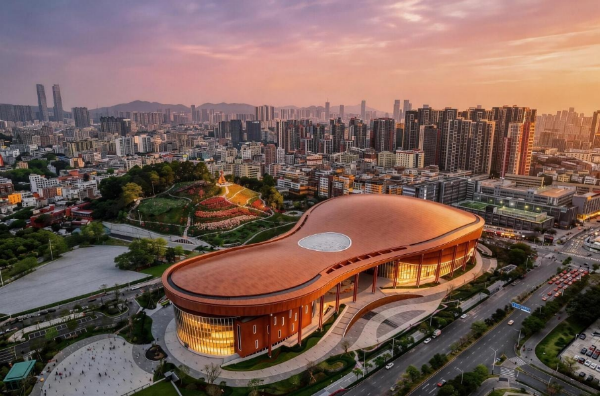
    The 2026 Longgang Spring Festival Flower Fair will be held from Feb 10 to 16 at the East Square of Shenzhen Universiade Center Stadium.This year's fair has expanded in scale, featuring around 260 diverse vendors offering everything from traditional festive flowers and cultural-creative products to specialty New Year goods from around the world, providing a one-stop shopping experience.Visitors explore the vibrant Spring Festival flower market.Centered on the "horse" as its core theme — symbolizing good fortune and success in the coming year — the fair will feature decorative arches and themed photo zones to enhance the festive atmosphere.The event is structured around three main highlights: a traditional market featuring flowers, couplets, and regional delicacies; a "Tech Innovation Zone" featuring AI installations, smart robots, and digital IP performances for an immersive tech-meets-culture experience; and a collaboration with the nearby Shenzhen Universiade World, hosting an inspiration-themed retrospective exhibition with Chinese New Year-themed installations for photo opportunities.By integrating traditional customs with modern technology, the fair reflects Longgang's commitment to innovating cultural consumption. In addition, temporary flower stalls will be set up in various neighborhoods for residents' convenience.A calligrapher writes the Chinese character "Fu" (blessing) with a brush on red paper.Red winterberry branches fill blue-and-white porcelain vases, creating a vibrant festive atmosphere for the holiday season.

    Guangdong's trade with APEC economies exceeds 6t yuan in 2025

    02 03, 2026

    South China's Guangdong province purchased 1.72 trillion yuan ($242.25 billion) worth of mechanical and electrical products from APEC economies last year, marking a 13.7 percent year-on-year increase.The figure represented 73.2 percent of the province's total imports from APEC economies, said a statement released by Guangdong Customs on Friday.Among them, imports of integrated circuits surged to 987.35 billion yuan, a 19.6 percent year-on-year increase, while imports of computers and their parts reached 261.88 billion yuan, a year-on-year rise of 17.9 percent, the statement said.The steady growth of imports from APEC economies has helped Guangdong, China's biggest foreign trader, reach a total trade volume of more than 6.16 trillion yuan in 2025, up 3.3 percent year-on-year, the statement said.Guangdong's trade with APEC economies remained steady and upbeat in the previous year, it said.The province's exports to APEC economies hit 3.82 trillion yuan, a year-on-year increase of 1.1 percent, while its imports from those economies grew at an even faster rate of 8.7 percent year-on-year, totaling 2.34 trillion yuan.Hong Kong Special Administrative Region, the United States and Chinese Taiwan island were Guangdong's top three trade partners among APEC economies in 2025.Guangdong's trade volume with the three APEC economies reached 1.28 trillion yuan, 945.32 billion yuan and 833.08 billion respectively last year, accounting for nearly 50 percent of the province's total trade volume with APEC economies, it said.Private enterprises recorded 3.77 trillion yuan in trade volume with APEC economies last year, up 4.1 percent and accounting for 61.2 percent of the province's total trade volume with those economies, according to the statement.Foreign companies and joint ventures achieved 2.17 trillion yuan trade volume with APEC economies, accounting for a 6.2 percent rise year-on-year and representing 35.2 percent, a 0.8 percentage points increase from 2024.

    APEC meetings opportunity for region to strive for results-oriented consensus: China Daily editorial

    02 03, 2026

     WANG XIAOYING/CHINA DAILYWhile it is the APEC economic leaders' meetings that grab the headlines, it is the work beforehand that prepares for these high-stake gatherings.That is why the first Asia-Pacific Economic Cooperation Senior Officials' Meeting and related events, hosted by China in Guangzhou from Sunday to Feb 10, deserve more attention than they are likely to receive.The meetings in Guangzhou, capital of Guangdong province, mark the opening act of the APEC "China Year" and the first official step toward the 2026 APEC Economic Leaders' Meeting, to be held in neighboring Shenzhen in November.Over 50 meetings of about 1,000 participants will discuss issues spanning trade, finance, digital rules, the green transition, supply chains and people-to-people exchanges. APEC is arguably one of the most practical platforms for regional economic cooperation in the world, and these preliminary gatherings function like workshops where agreements are hammered out and consensus is built.The theme China has put on the table as the host — "Building an Asia-Pacific Community to Prosper Together" — is pertinent to the region's pressing needs. Beijing has paired it with three operational priorities — openness, innovation and cooperation — which have been the hallmarks of the region's dynamism, but are now under immense strain.Although the Asia-Pacific remains one of the most dynamic engines of the global economy, it is navigating the rough seas of sluggish global growth, rising protectionism, fragmented supply chains, widening development gaps, accelerating climate and energy pressures, as well as the technological shock wave of artificial intelligence and the governance deficit.China's message in Guangzhou is clear: multilateralism and openness should prevail over unilateralism and protectionism. To that end, regional economies should focus on making the cake bigger rather than striving for the largest share of it.Over the past decades, average tariffs across APEC economies have fallen dramatically, and the region has been a major beneficiary of open trade. Yet today, trade barriers are creeping back. With 2026 marking the 20th anniversary of the vision of a Free Trade Area of the Asia-Pacific, China is urging APEC members to recommit to a World Trade Organization-centered multilateral trading system, deeper regional integration and stronger connectivity. The logic is simple: supply chains work best when they are linked, not weaponized. The regional economies should realize that no one can realize its own prosperity at the cost of others, or ensure its own "security" by making others "insecure".Innovation is the engine of future growth that regional economies can collaboratively foster. The Asia-Pacific is home to many of the world's most vibrant innovation hubs, but the benefits of digitalization and AI are unevenly distributed. China's proposal is not just to race ahead, but to widen the track: promote safe and orderly data flows, deepen cooperation on open-source technologies and bridge the digital and AI divide. Its idea of a World Artificial Intelligence Cooperation Organization reflects this. The proposal treats AI not as a geopolitical trophy, but as a global public good that needs shared rules, standards and literacy.The hosting of the APEC meetings in the heart of the Guangdong-Hong Kong-Macao Greater Bay Area is both symbolic and substantive. Now a global innovation hub, it embodies what happens when openness meets pragmatism and a pioneering spirit. China is signaling that it wants to share that experience with regional economies to promote sustainable common prosperity.Cooperation is where APEC's comparative advantage is evident. APEC operates through practical mechanisms: economic and technical cooperation, capacity building and sector-specific initiatives. China is encouraging the APEC member economies to continually use these tools to turn diversity into complementarity — whether in food security, energy, small and medium-sized enterprises, transportation, healthcare or human resources — so that no economy is left behind.Green development cuts across all of the three priorities where the APEC economies have broad common interests. China has built a large renewable energy system and has become a major supplier of new energy technologies. By funding APEC initiatives on digitalization for green transitions and supporting free flows of green technologies, the country is trying to align climate actions with growth, not pit them against each other.The Asia-Pacific is at a critical juncture. The broader choice facing the region is stark: solidarity and cooperation, or unilateralism and protectionism. History has shown which path works. Over the past more than 30 years, APEC has proved the rationality of openness and shared benefits. Abandoning that now would undo all the past efforts and be self-defeating.The Guangzhou meetings are down-to-earth preparations for not only the November gathering but also a more coordinated, cooperative and open APEC. They are about forging consensus within the region that striding together is possible — and worth the effort of overcoming differences.