The 2026 Global Launch of 1688 Cross-border TrustPass, running under the banner "AI Powers Global Trade", kicked off in Zhujiang on May 26.

    06 12, 2026

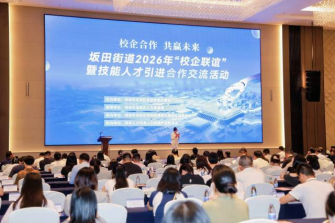
    Guided by the Longgang District Bureau of Commerce and hosted by Alibaba 1688, a purchasing agent service, the event marks a key step for 1688 to further expand its cross-border business and empower manufacturers in industrial clusters to go global.It also stands as a vivid practice of Longgang’s efforts to integrate the digital and real economies and build a thriving hub for cross-border e-commerce.Jin Ming, head of 1688's cross-border channel ecosystem, analyzes the latest trends in global B2B e-commerce and favorable cross-border policies at the launch event.At the launch event, Jin Ming, Head of Cross-border Channel Ecosystem at 1688, delivered a speech titled "1688 Cross-border Supply Chain: Sail Ahead and Seize Opportunities".He analyzed the latest trends in global B2B e-commerce and favorable cross-border policies, helping enterprises identify new opportunities in the global marketplace.Yu Shuhui, General Manager of Guangzhou Saisi Technology, shared practical experience in her presentation titled "Growth Path of Top-tier Merchants on 1688", illustrating the complete process of creating cross-border hit products, which struck a chord with attendees.During the session based on the theme "AI Plus Supply Chain: Securing Growth for B2B Businesses", Lu Jinyong, Industry Operations Manager of 1688 Digital Supply Chain, unveiled three major upgraded core capabilities of Cross-border TrustPass. These comprise AI-powered intelligent matching, multilingual operation and full-spectrum cross-border supply chain support.Integrated with advanced large AI models, the upgraded service features automatic product creation, AI customer service, data analytics and automated marketing. It offers manufacturers in industrial clusters one-stop overseas solutions covering brand promotion, precise customer acquisition and cross-border order fulfillment. Xia Zhiqiang, General Manager of 1688 Shenzhen Division, speaks about the futureprospects of in-depth cooperation between the platform and Shenzhen's industrial clusters. Xia Zhiqiang, General Manager of 1688 Shenzhen Region, delivered a speech entitled "New Opportunities: Driving Business Growth", looking forward to broad prospects for in-depth cooperation between the platform and Shenzhen’s industrial clusters.The rollout of Cross-border TrustPass signals a comprehensive upgrade to 1688's cross-border strategy. Leading cross-border merchants also shared insights on AI-powered product selection, channel expansion and supply chain optimization, offering practical solutions for participating enterprises.Moving forward, Longgang District will continue to deepen cooperation with Alibaba 1688. The two sides will scale up the application of AI technologies to facilitate the export of industrial goods and the global expansion of featured industries, injecting strong momentum into Shenzhen's drive to build itself into a world-class cross-border e-commerce hub.

    Longgang launches AI Hub to serve smart hardware industry

    06 03, 2026

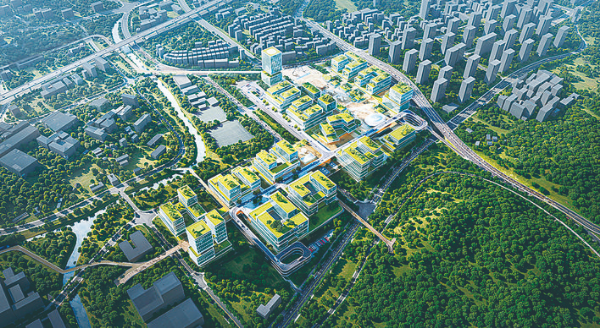
    A rendering of Global Intelligence Hardware Valley (AI Hub) in Longgang district, Shenzhen.Longgang district of Shenzhen in South China's Guangdong province has launched the Global Intelligence Hardware Valley (AI Hub) to offer comprehensive services for smart hardware companies from concept design to mass production.The district made the announcement at its second edition of the Artificial Intelligence and Robotics Development Conference on May 30. Serving as the primary service platform of the hardware valley, the AI Hub Service Center was simultaneously inaugurated at the conference.The AI Hub spans a planned area of 410,000 square meters with a total building area of 1.3 million sq m. It is designed to include R&D offices, smart factories, various innovation platforms, and supporting facilities, catering to high-end production needs.The AI Hub Service Center features areas for corporate promotion, industry exchange, project roadshows, and administrative services. It integrates government services, policy promotion, industry connections, investment and financing support and talent development, supported by a dedicated service team and an integrated online-offline service platform.Currently, over 70 companies and institutions, including Shenzhen JLC Technology Group, Guangdong Well Technology Co and Anycubic, have agreed to join the service center, forming the beginnings of an industry ecosystem.To foster long-term growth, the AI Hub also launched the OPC Entrepreneurship Training Camp for those engaging in One Person Company, with the first training session to start in July at Shenzhen City Polytechnic.

    Longgang uses cultural expo to accelerate AI-driven cultural innovation

    05 28, 2026

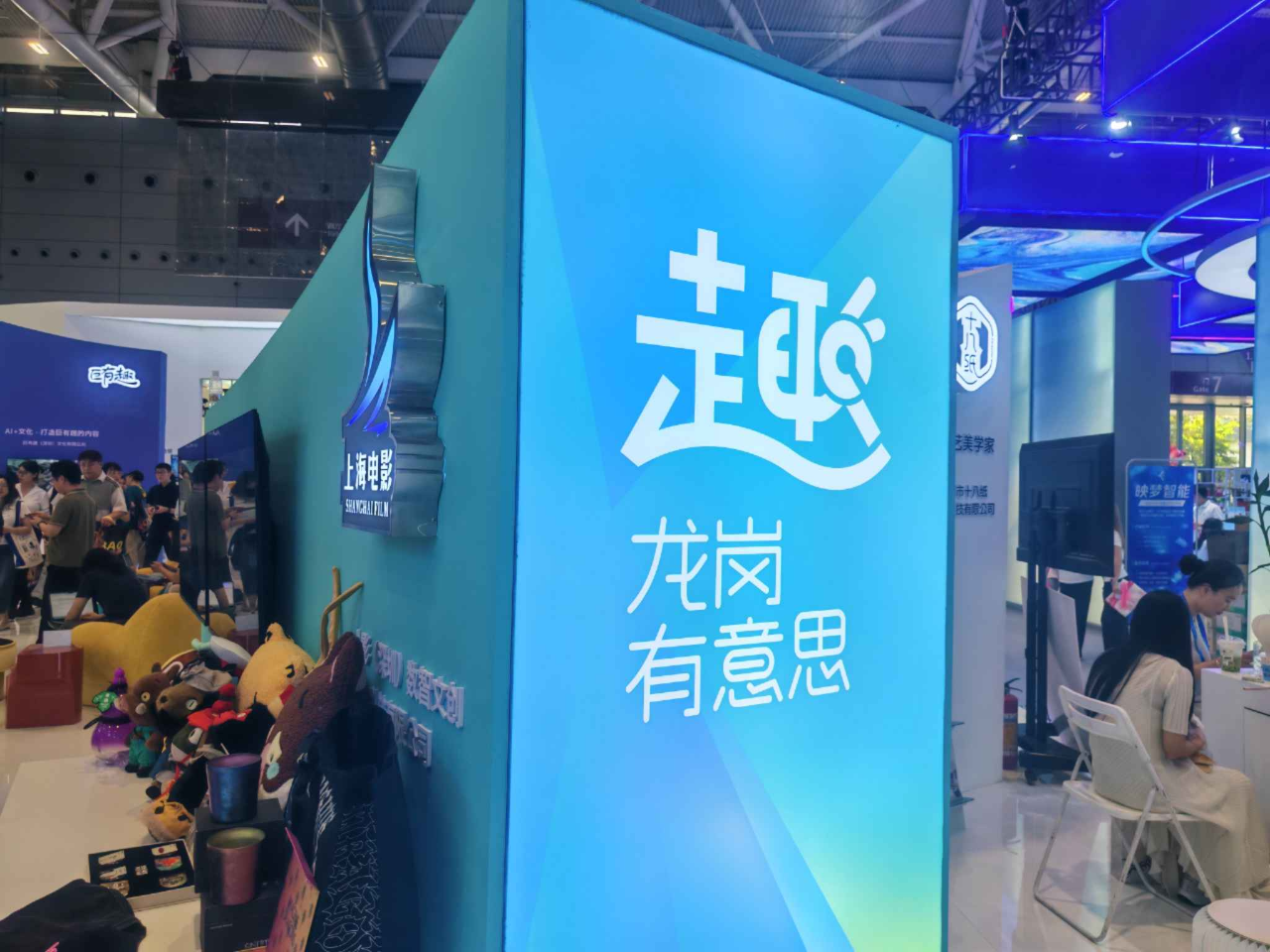
    Longgang district of Shenzhen in South China's Guangdong province, as a vital hub for the city’s cultural and creative industry, has been working to empower the transformation of the industry through technological innovation, utilizing the digital creative industry corridor to attract high-end resources and boost the sectors of artificial intelligence-generated content, brain-computer interface technology, and digital IP.The Longgang exhibition area at the 22nd China (Shenzhen) International Cultural Industries Fair, held in Shenzhen from May 21 to 25.During the 22nd China (Shenzhen) International Cultural Industries Fair, held in Shenzhen from May 21 to 25, Longgang hosted a major investment promotion event, showcasing cutting-edge AI cultural innovations and launching several key cultural industry projects.Eleven AI cultural innovations were unveiled at the event, spanning content creation, smart and trendy IP toys, brain-computer interface technology, smart education, and digital art trading. These innovations align with the current market trends of cultural consumption upgrades and digital industry integration, showcasing Longgang's robust technological and creative prowess.Movie Star IP lands in Longgang district of Shenzhen at the 22nd China (Shenzhen) International Cultural Industries Fair, held in Shenzhen from May 21 to 25.Notably, Shenzhen Buming Cultural Technology introduced an AI animation and comics creation platform and national cultural products that are now in vogue, producing over 5,000 AI short dramas.A highlight of the expo was the fusion of high-end technology and cultural creativity, with impressive achievements registered in the brain-computer interface and smart education sectors.The investment promotion efforts serve as a concentrated showcase of Longgang's achievements in the integration of AI and the cultural creative industry. They also represent a significant move for the region to cultivate new high-quality productive forces in digital culture and strategically position itself to prepare for the future growth of the cultural creative industries.A ceremony for the signing of agreements on the collaborative development of IPs is held at the 22nd China (Shenzhen) International Cultural Industries Fair, held in Shenzhen from May 21 to 25.

    Longgang builds data lab to power low-altitude economy

    04 01, 2026

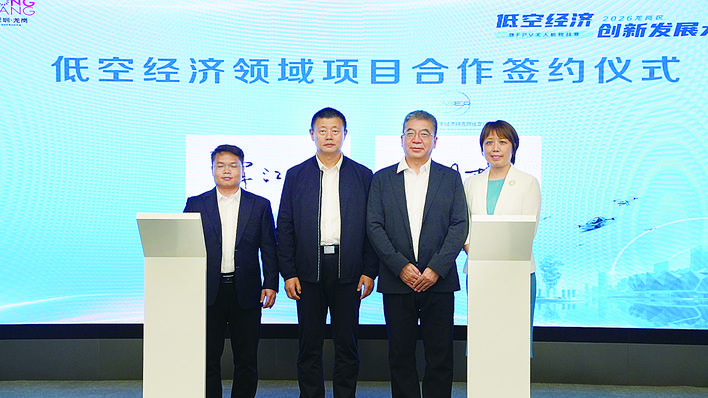
    The Longgang Government Services and Data Management Bureau signs a strategic cooperation agreement with the Low-Altitude Economy Branch of International Digital Economy Academy (IDEA) at the Conference.Longgang signed a strategic cooperation agreement and established a Joint Laboratory for High-Quality Data at the 2026 Longgang Low-Altitude Economy Innovation and Development Conference on March 27.The partners are the Longgang Government Services and Data Management Bureau and the Low-Altitude Economy Branch of the IDEA. The move marks a key step in the market-oriented reform of data elements for the local low-altitude economy.The two sides will set up the joint laboratory to conduct research on key low-altitude data technologies and pilot the application of research outcomes locally. They will also explore the establishment of a low-altitude data operation center to promote data integration, governance and regulated flow, unlock the value of data, and develop a replicable "Longgang Model" for data-driven industrial innovation.As a core hub for Shenzhen's low-altitude economy, Longgang has established a full industrial chain supported by three major platforms: a low-altitude intelligent test base, a unified UAV management service platform, and a spatiotemporal digital infrastructure. The district contributes abundant data resources and practical scenarios, while the institute brings advanced digital solutions. The cooperation will deepen the integration of the data industry with the low-altitude economy, autonomous driving and embodied intelligence.Moving forward, Longgang will harness data potential and establish a regulated data ecosystem to promote the high-quality, safe and sustainable development of the low-altitude economy.

    China charts a new course for economic stability | News from Xinhua

    01 22, 2026

    China's latest GDP figures show an economy holding firm in a troubled world. Growth in 2025 proved more resilient than many had expected. Yet the numbers point to something beyond mere endurance: they signal the early results of a strategic economic rebalancing that is increasingly the central theme of policy.As China enters the first year of its 15th Five-Year Plan (2026-2030), its economic trajectory is defined less by headline growth than by a move toward greater underlying stability and balance.Policymakers are fine-tuning their approach, prioritizing the expansion of domestic demand, strategic investment in human capital, and fostering innovation to build intrinsic stability for sustained development.STEERING STABILITYChina's economic policy is increasingly calibrated, favoring targeted support that can underpin long-term resilience over sweeping stimulus measures that risk fueling financial or sectoral imbalances."Evaluating 2026 requires a medium- to long-term view of structural change," said Wang Han of Industrial Securities. "The goal is to improve economic quality, not just chase a growth rate."The central bank's recent actions exemplify this nuance. While it implemented measured cuts to interest rates and mortgage requirements, analysts at Nomura described the moves as "low-profile easing", or careful adjustments designed to provide support without fueling excessive speculation in equity markets.On the fiscal front, Vice Minister of Finance Liao Min said Tuesday that fiscal spending will be further expanded this year, building on the proactive levels set for 2025. He emphasized that the ministry has fully taken into account the medium- to long-term sustainability of public finances, with a focus on strengthening future development. Efforts will be directed toward channeling more fiscal resources into boosting consumption, investing in human capital, and strengthening livelihood protection.To external observers, this represents a meaningful step toward economic maturity. "Recent policy signals tell a different story -- one of strategic transformation, resilience and sustained fiscal progress," noted Chris Sherrard, editor-in-chief of The Irish News, contrasting this with a foreign narrative preoccupied with the growth numbers.SHIFTING GEARSAchieving intrinsic stability necessitates a structural rebalancing. With the traditional engines of investment and export moderating or facing uncertainties, policymakers are turning to domestic consumption and technological advancement for sustained growth."China is at a critical phase in the transition from old growth drivers to new ones," noted Kang Yi, head of the National Bureau of Statistics. "Emerging growth drivers are gaining momentum, which will help counter downward pressure and create impetus for growth."Expanding domestic demand has been highlighted as a primary task for 2026, according to the Central Economic Work Conference held in December last year.Consumption, particularly in services, is slated to play a larger role in the economy. Analysts point to sectors such as elderly care, green technology, and cultural tourism as key areas of potential expansion.Wang Changlin, deputy head of the National Development and Reform Commission (NDRC), told a press conference Tuesday that China will formulate and release an implementation plan this year for its strategy to expand domestic demand for the 2026-2030 period.Alongside efforts to stimulate consumption, China is turning to innovation to drive productivity and future growth. Goldman Sachs notes that the country's long-term growth will rely more heavily on total factor productivity, with technologies like artificial intelligence expected to boost growth. Moody's also expects technology to propel industries ranging from advanced manufacturing to smart appliances, driving efficiency and supporting revenue.INVESTING IN PEOPLEParticularly noteworthy in China's evolving policymaking is the simple yet powerful idea of "investing in people." This framing treats human capital not merely as a social consideration, but as a fundamental input for sustainable, innovation-driven growth.The emphasis on "combining investment in physical assets and human capital," as reiterated in key policy documents such as the recommendations for formulating the 15th Five-Year Plan, reflects an understanding that long-term competitiveness requires nurturing talent alongside building infrastructure."'Investing in people' is crucial for addressing broad systemic challenges," said Zhang Jun of China Galaxy Securities. It represents, in his view, a strategy to simultaneously enhance public welfare and economic dynamism.This principle is beginning to inform specific policies. Deloitte noted in a research report that recent high-level discussions have identified increasing household incomes as the most effective lever to boost consumption -- a subtle shift from earlier approaches designed at subsidizing purchases.Zhou Chen, an official with the NDRC, said that authorities are formulating plans for stabilizing and expanding employment while enhancing job quality, as well as an initiative to raise the incomes of urban and rural residents.Noting that "investment serves as both immediate demand and future supply," Zhou said that the country will work to enhance the returns on investment, which can also directly translate into higher income for workers.The nation's demographic profile is also being reinterpreted as an asset. With the world's largest annual output of science, technology, engineering, and mathematics (STEM) graduates, this vast reservoir of talent is increasingly viewed as the driving force behind high-quality, innovation-driven growth."China's advantage is evolving from a 'population dividend' to a 'talent dividend'," noted Su Jian, director of China Center for Economic Research at Peking University.As China navigates the complexities of 2026, its focus on intrinsic stability through rebalancing may prove to be the defining feature of the country's next phase of development, and a measured response to the complex challenges ahead.  Notice:The above content is transferred from Xinhua, just for information sharing.We respect your intellectual property right and your other lawful rights. As any content here infringes any of your lawful rights, please contact us, and we will delete related content.

    China’s GDP grew 5.0% in 2025

    01 20, 2026

    China’s gross domestic product (GDP) reached 140187.9 billion yuan in 2025, presenting a year-on-year increase of 5.0% on a constant-price basis, according to the data released by the National Bureau of Statistics on January 19.“2025 featured the complicated and changeable economic situation at home and abroad. Under pressure, China’s economy advanced in an innovative and promising way. The nation made new achievements in the high-quality development, with the major economic and social targets achieved at the conclusion of the nation’s 14th Five-Year Plan period (2020-2025), expressed by Kang Yi -- the director of the National Bureau of Statistics at the news conference.In quarterly terms, the nation’s GDP grew by 5.4% in the first quarter, by 5.2% in the second quarter, by 4.8% in the third quarter and 4.5% in the fourth quarter.In 2025, the nation was persistently on its path of high-quality development, characterized by the promising tendency of the economic development. In the year, the high-tech manufacturing enterprises above designated size (20 million yuan) generated 17.1% of the added value of the above-designated-size industrial sector, while contributing to 50% of the nation’s economic growth. The goods import and export volume went up 3.8% year on year. With the effective and mighty guarantee for the livelihood, the disposable income per capita surged in the same pace of the economic development -- 5.0%.“Noting that the growing influence of the external and changing situation and the deteriorating tensions between the internal demand and supply, the nation’s economic development are confronted with the long-existing problems and new challenges”, Kang stated. And, in the next stage, the nation should carry out more proactive and effective macro policies, to consistently expand the internal demands, optimize the supply, trigger new and positive growth contributors and make full use of the existing ones, so as to develop the new quality productive force practically, to deeply fuel the unified national market and to promote the effective and reasonable growth in the economic quality and quantity, hence ensuring a great start of the 15th Five-Year Plan period (2026-2030).Reference: XinhuaNotice: we respect your intellectual property right and your other lawful rights. As any content here violates your lawful rights, please contact us, and we will delete related content. 

    China's foreign trade hits new high, up 3.8 pct in 2025 | News from Xinhua

    01 14, 2026

    China's foreign trade expanded 3.8 percent year on year in yuan terms in 2025, official data showed on Wednesday.Last year, the country's foreign trade value hit 45.47 trillion yuan (about 6.48 trillion U.S. dollars), according to data released by the General Administration of Customs. This marks the ninth consecutive year of growth for China's foreign trade since 2017.Exports grew 6.1 percent year on year to 26.99 trillion yuan in 2025. Imports reached a record 18.48 trillion yuan, with year-on-year growth of 0.5 percent, cementing China's status as the world's second-largest import market for 17 years in succession.During the 14th Five-Year Plan period (2021-2025), China's cumulative import and export value had exceeded 200 trillion yuan, representing a 40-percent surge from the 13th Five-Year Plan period and an average annual growth rate of 7.1 percent.At a government press conference held in Beijing on Wednesday, Wang Jun, deputy head of the General Administration of Customs, said that China's foreign trade achievements are "truly remarkable and hard-won" amid global economic challenges.Wang attributed the steady growth of China's foreign trade to three major drivers: The country's pro-trade stabilization policies, the sustained release of import demand from its vast domestic market, and a sophisticated industrial system that continuously adapts to evolving overseas needs. Notice:The above content is transferred from Xinhua, just for information sharing.We respect your intellectual property right and your other lawful rights. As any content here infringes any of your lawful rights, please contact us, and we will delete related content.

    China aims for secure, reliable supply of AI core tech by 2027 | News from Xinhua

    01 08, 2026

    China aims to achieve secure and reliable supply of key core artificial intelligence (AI) technologies by 2027, with its industrial scale and empowerment level remaining among the world's forefront, according to a recent government action plan.The plan, jointly issued by eight departments including the Ministry of Industry and Information Technology, the Cyberspace Administration of China, and the National Development and Reform Commission, outlines an ambitious push to deeply integrate AI with the manufacturing sector, foster new quality productive forces and comprehensively empower new industrialization.By 2027, the plan targets the deep application of three to five general-purpose large AI models in manufacturing, the development of specialized, full-coverage industry-specific large models, the creation of 100 high-quality industrial datasets, and the promotion of 500 typical application scenarios.It also aims to cultivate two to three globally influential ecosystem-leading enterprises, a batch of specialized and sophisticated small and medium-sized enterprises, and a group of enabling service providers proficient in both AI technology and industry know-how.Furthermore, China plans to build a world-leading open-source ecosystem, enhance security governance capabilities, and contribute Chinese solutions to global AI development.The document outlines measures including promoting the coordinated development of AI chips' hardware and software, supporting innovations in model training and inference methods, fostering key industry-specific large models, and deeply embedding large model technology into core production processes.The plan also emphasizes making breakthroughs in key technologies such as security protection for industrial model algorithms and training data protection.  Notice:The above content is transferred from Xinhua, just for information sharing.We respect your intellectual property right and your other lawful rights. As any content here infringes any of your lawful rights, please contact us, and we will delete related content.