Longgang unveils 32 industrial plots to fuel high-quality development

    03 05, 2026

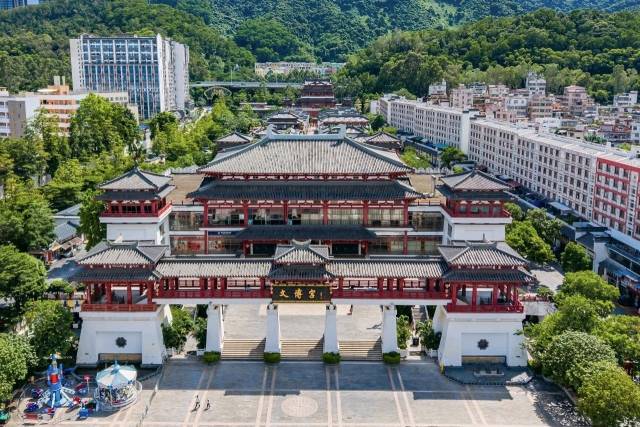
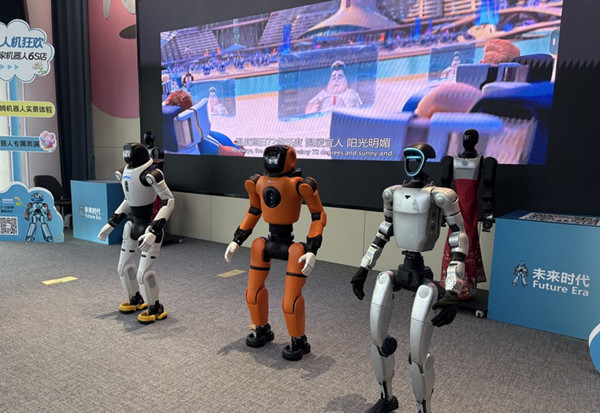
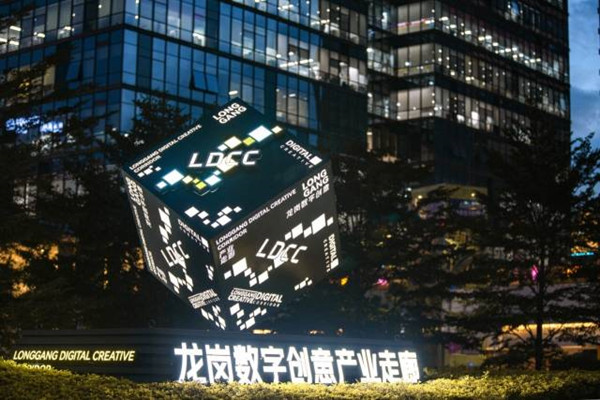
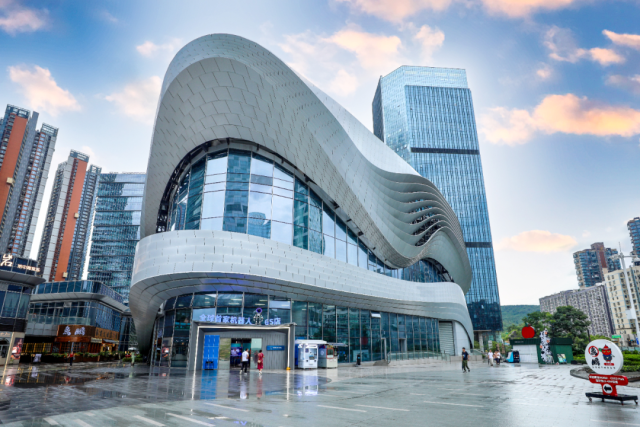
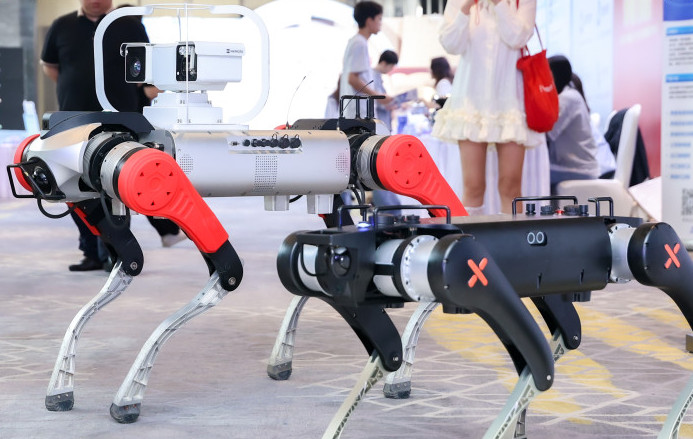
    Longgang's Wuhe Hub Area: a key industrial hub in Shenzhen.Longgang district announced the rollout of 32 standardized industrial plots covering 350 hectares at the Conference on Empowering High-Quality Industrial Development through Spatial Support on March 4, with 16 enterprises signing agreements to establish themselves in the district.Longgang, a major industrial hub in Shenzhen, boasts 6,150 hectares of existing industrial land and over 1,300 industrial parks spanning 9.7 million square meters. It supplied 320 hectares of industrial land during the 14th Five-Year Plan (2021-25), the most in the city, and will allocate at least 55 hectares in 2026. More high-quality land will be earmarked for the 15th Five-Year Plan (2026-30) to ensure sufficient land availability for high-quality enterprises and projects.The district has built a comprehensive industrial space system featuring sufficient land supply, diverse park types, flexible supply models, full-chain services, and comprehensive factory support, with tailored solutions like self-construction, lease-then-purchase, and custom-built industrial space.The district introduced a streamlined approval mechanism during the conference that allows construction to begin immediately after land acquisition and production to start upon project completion. It also launched "Longgang i-Space", Shenzhen's first 3D industrial space service platform, and established an alliance of industrial parks to enhance collaboration.Sixteen AI and next-gen information technology enterprises at the conference also signed contracts via intelligent robots."Longgang will always serve as a strategic partner and provide sufficient space and quality services for enterprises to thrive," said a senior Longgang official, inviting more entrepreneurs to invest and grow alongside the district.

    0.01mm micro-drills from Longgang power AI revolution

    03 03, 2026

    Micro-drills manufactured by Jinzhou Tech. Shenzhen Jinzhou Precision Technology has resumed full production after the Spring Festival holiday on Feb 28, with its workshops operating at maximum capacity.As one of the only two companies worldwide and the only one in China capable of producing 0.01mm ultra‑fine micro‑drills, Jinzhou Tech has emerged as a critical player in the artificial intelligence supply chain, mass-producing ultra-thin drill bits essential for high-performance servers.Automated production equipment runs at Jinzhou Tech's workshop, supporting the manufacturing of high-precision micro-drills.Its core competitiveness lies in cutting-edge micro‑drills with a 50:1 aspect ratio — 0.2mm in diameter and 10mm in cutting length. These drills reliably handle 10mm‑thick plates, with a breakage rate as low as 0.005 percent, far outperforming industry peers. Its ultra‑high‑aspect‑ratio drills serve as a backbone for AI servers, directly boosting PCB (Printed Circuit Board) signal transmission and supporting the global AI computing boom.As a core subsidiary of Fortune Global 500 company China Minmetals Corporation, Jinzhou Tech is also a national-level single-item manufacturing champion, a winner of the National Science and Technology Progress Award (Second Class), and an MIIT (Ministry of Industry and Information Technology) intelligent manufacturing demonstration factory.Backed by core technologies, the company is driving Longgang's push toward high‑end, intelligent manufacturing while aiming for a strong first‑quarter performance.

    Shenzhen's Longgang district blends technology, tradition for unique Chinese New Year celebrations

    02 28, 2026

    The intangible cultural heritage parade showcases cultural charm.During the Chinese New Year holiday, the Longgang district of Shenzhen in South China’s Guangdong province showcased a vibrant blend of cutting-edge technology and rich cultural heritage for festival celebrations.It rolled out a series of events that seamlessly integrated artificial intelligence, mixed reality (MR), and robotics with traditional festivities and Hakka culture. This innovative approach highlighted Longgang's technological prowess while offering a warm cultural experience, making it a standout in the holiday tourism market.The district welcomed more than 1.74 million visitors, a 37.24 percent increase from 2025, generating a total tourism revenue of over 1.8 billion yuan ($262 million), up 36.04 percent from the previous year.From the first to the seventh day of the Chinese New Year, the outdoor plaza transformed into a futuristic showcase featuring calligraphy-writing robots, interactive robotic dogs, and humanoid robots performing traditional music, drawing numerous families and young visitors eager to experience the fusion of technology and tradition.The Shenzhen Universiade World commercial area attracted large crowds, featuring a spring flower market with over 260 vendors that offer a variety of flowers and foods. Highlights included a naked-eye 3D show and AI robots interacting with traditional lion dances, breathing new life into cultural customs.In the historic Gankeng Ancient Town, AI experiences added fun and ceremony to the festivities. Visitors enjoyed personalized services from AI smart glasses that served as virtual tour guides, providing insights into Hakka culture.

    Blockbuster spurs Shenzhen travel boom

    02 28, 2026

    The film's Beijing premiere earlier this month brought together director Zhang Yimou (center) and the cast. [Photo provided to chinadaily.com.cn]Scare Out, the second- highest-grossing blockbuster during Spring Festival, has boosted tourism and sparked widespread local interest in Shenzhen, Guangdong province, where the movie was primarily filmed, local authorities said.Produced under the guidance of the Ministry of State Security, the film features more than 100 modern locations, including iconic sites such as the Futian Central Business District, the Qianhai architectural complex, and the Shenzhen Universiade Sports Center.Propelled by the popularity of the movie — the latest directorial work of Zhang Yimou— the city welcomed over 10.5 million visitors, generating 11.84 billion yuan ($1.72 billion) in travel revenue, according to the Culture, Media, Tourism and Sports Bureau of Shenzhen Municipality.Scare Out features actors Yi Yangqianxi and Zhu Yilong (right). [Photo provided to chinadaily.com.cn]Starring actors Yi Yangqianxi and Zhu Yilong, the story follows a team of national security officers as they investigate the leak of information concerning the country's latest fighter jet.As the first film themed on modern national security, director Zhang revealed during the Beijing premiere that he found the story compelling because it breaks away from the conventional formula. Instead of setting espionage thrillers decades ago — mostly between the 1930s and 1940s — the film unfolds in a contemporary metropolis.A scene from Scare Out. [Photo provided to chinadaily.com.cn]"The sequences carry a strong sense of modernity that makes everything real and immediate," said Zhang, recalling that national security officers had shared many real-life stories with him."But to turn it into a story of about 100 minutes, it requires a high degree of precision and tight pacing. The story has to be clear, well-told and consistently engaging," Zhang added.As of Feb 27, the film — which also stars actor Lei Jiayin and actress Yang Mi — has grossed over 1.02 billion yuan from more than 22 million tickets sold, according to industry tracker Maoyan.

    Longgang hosts China's 1st human-robot collaborative Spring Festival gala

    02 26, 2026

    The scene of the party.Human-machine dance.Robots send New Year greetings.The first-ever human-robot collaborative Spring Festival gala premiered on Feb 19 via Guangdong TV's media platforms.The event integrated cutting-edge AI technology with traditional festive culture, transforming robots from stage props into creative partners throughout the entire production process — from script development and performance to hosting interactions.Highlights featured a martial arts demonstration with robots battling alongside young kung fu practitioners, a futuristic mechanical lion dance reimagining Lingnan cultural heritage, and a moving skit examining human emotions in a technology-driven future. Robot host Xialan engaged in smooth, natural interactions, emphasizing the evening's core message: "not just tools, but creative partners".Breaking new ground, the gala introduced a "watch-and-buy" feature that allows viewers to purchase featured robots instantly through an e-commerce platform, bridging cultural entertainment with industrial applications.The event reflects Longgang district's emergence as a leading AI hub in Shenzhen, home to over 600 AI enterprises. With China's first government agency dedicated to the robotics industry, Longgang has identified 564 application scenarios and aims to become the nation's first demonstration area for embodied intelligent robots. This gala represents a cultural preview of that ambitious vision — showcasing how humans and machines might collaboratively shape tomorrow's world.

    Shenzhen metro debuts China's 1st HarmonyOS-powered smart stations

    02 24, 2026

    Seamless gate access.HarmonyOS smart maintenance tablet.Shenzhen has launched the country's first pilot smart metro stations powered by HarmonyOS, with the Hongling South Station on Line 11 and the Jixi Station on Line 16 in Longang district leading the way in system upgrades.Meanwhile, Shenzhen Institute of Advanced Technology Station on the Line 6 branch has introduced "NearLink" seamless gate-passing technology, marking a new era of intelligent, coordinated transit systems.With the integration of the open-source HarmonyOS ecosystem, station devices now operate as a unified network. Cameras, ticket gates, escalators, and other equipment can "communicate" and collaborate actively, forming a responsive and adaptive "station intelligence." Station management has also entered an automated phase — thanks to the "one-click activation" feature, systems can conduct safety checks and adjust environmental settings automatically each morning.Maintenance efficiency has also seen a major boost. Engineers now use HarmonyOS-powered tablets to inspect equipment — just a tap reveals real-time status and alerts. Inspection time has been cut by over 60 percent, and per-device checks by more than 80 PERCENT. At the Shenzhen Institute of Advanced Technology Station, passengers with HarmonyOS-enabled phones or watches can breeze through ticket gates without taking out their devices, unlocking a new level of commuting convenience.Moving forward, Shenzhen Metro plans to expand the use of HarmonyOS-based hardware and software based on pilot results, build an innovative rail ecosystem with Shenzhen characteristics, and deliver a smarter, smoother travel experience for all.

    Asia-Pacific community highlighted at meeting

    02 13, 2026

    Foreign Minister Wang Yi (center) attends the opening session of the First Senior Officials' Meeting of APEC China 2026 in Guangzhou, Guangdong province, on Tuesday. ZHENG ERQI/CHINA DAILYForeign Minister Wang Yi called on Tuesday for closer regional cooperation amid rising unilateralism, growing protectionism and worsening economic fragmentation in the world, in order to build a prosperous, stable, open and interconnected Asia-Pacific community.Wang made the remarks when addressing the opening session of the first Asia-Pacific Economic Cooperation Senior Officials' Meeting in Guangzhou, Guangdong province. The event precedes the APEC Economic Leaders' Meeting, which is scheduled for Nov 18 and 19 in Shenzhen, Guangdong.As the world has entered a new period of turbulence and transformation, the challenges facing Asia-Pacific development are mounting and regional economic integration is encountering headwinds, he noted."Against this backdrop, China fully recognizes that our third time as APEC host carries with it significant responsibilities as well as a glorious mission," Wang said, referring to the previous APEC leaders' meetings held in 2001 in Shanghai and in 2014 in Beijing.In order to build a better Asia-Pacific community, he underlined the importance of upholding the postwar international order and the purposes and principles of the United Nations Charter, which he said form the very foundation of prosperity and stability in the Asia-Pacific region and the wider world." This is especially valuable today and deserves to be dearly cherished," he added.Noting that the Asia-Pacific region owes its success to a peaceful and stable environment, as well as to the APEC economies' commitment to promoting economic globalization and advancing regional economic integration, Wang highlighted the need for member economies to follow the "APEC way" by building consensus through consultation, handling differences properly and keeping regional cooperation on the right track."We should strengthen macroeconomic policy coordination, uphold open regionalism, advance trade and investment liberalization and facilitation, ensure the safe and orderly flow of people, goods, capital and data, and build closer industrial and supply chains," he said.Wang called for safeguarding the multilateral trading system centered on the World Trade Organization and leveraging the guiding role of regional trade arrangements to foster greater connectivity among various regional free trade agreements and gather momentum toward a Free Trade Area of the Asia-Pacific, or FTAAP.The theme for APEC 2026 is "Building an Asia-Pacific Community to Prosper Together", with "openness, innovation and cooperation" set as the three priorities to realize the vision of building a prosperous and stable Asia-Pacific community."We should be more determined than ever to hold high the banner of building an Asia-Pacific community and explore the objectives and road map for community-building in the period ahead," Wang said.Underscoring that digital, smart and green transformations driven by innovation represent new growth drivers for APEC economies and show the path toward achieving sustainable development, he called for active efforts to build science, technology and innovation partnerships and foster an open innovation ecosystem.The APEC "China Year" coincides with the launch of the nation's 15th Five-Year Plan (2026-30).Wang highlighted that China will further deepen reform on all fronts, continue expanding high-standard opening-up, and deliver new opportunities for the Asia-Pacific and the wider world through new achievements of Chinese modernization.Carlos Kuriyama, director of the Policy Support Unit at the APEC Secretariat, emphasized the role of APEC in today's world against the backdrop of increasing geopolitical tensions."We need global solutions for global problems. And why not have APEC as a way to seek consensus, reach understanding, and then use this understanding at the global level? That will be a reward for everyone," he said.Aleksandr Shavlov, counselor of the Department of Trade Negotiations at the Ministry of Economic Development of the Russian Federation, highlighted China's role in advancing the building of an Asia-Pacific community."China is the leading economy to promote certain issues within APEC, such as digitalization, promotion of free trade and FTAAP agendas. We really appreciate China's role in APEC," he said.As a champion of free trade and open global economy, China has ranked as the world's largest trader in goods and the second largest in services. The Belt and Road Initiative has become a widely welcomed international public good and a major platform for global cooperation.Liu Wei, director of the Institute of International Studies at the Guangdong Academy of Social Sciences, said that in its efforts to uphold global trade liberalization, China provides the world with better and more competitive products, as well as a vast market, sharing development opportunities with other countries.