Longgang's H1 GDP rises 7.3% to exceed 309.49 billion yuan

    08-03,2026

    Based on the unified accounting results of Longgang's gross domestic product, the district recorded a GDP of 309.49 billion yuan ($45.84 billion) in the first half of 2026, up 7.3 percent year on year at constant prices.Breakdown by industry: value-added of the primary industry reached 57 million yuan, rising 32.6 percent.The secondary industry hit 203.29 billion yuan, an increase of 8.8 percent, while the tertiary industry registered 106.15 billion yuan, growing by 4.4 percent.In the first six months, the value-added of industrial enterprises above the designated size rose 11.7 percent year on year. Among major industrial sectors, the value-added of manufacturing of computers, communications and other electronic equipment grew 13.7 percent, manufacturing of electrical machinery and equipment expanded by 9.8 percent, and manufacturing of special-purpose machinery jumped 34.5 percent.In terms of output of major industrial products, output of mobile communication base station equipment rose 10.3 percent, optoelectronic devices climbed 7.3 percent, and electrical measuring instruments increased by 5.0 percent.Total retail sales of consumer goods of the district stood at 78.43 billion yuan in the first half of the year, growing 4.0 percent year on year.Sales of basic daily necessities and some upgraded consumer goods maintained strong momentum. Among entities above the designated size, retail sales of grain, oil and food rose 7.9 percent, daily necessities surged 31.3 percent, communication equipment jumped 57.7 percent, and cultural and office supplies grew 7.3 percent. Online retail saw robust growth, with online retail sales of goods by entities above the designated size rising 19.8 percent.Fixed-asset investment across the district dipped 19.4 percent year on year in the first half of the year. Excluding real estate development, the decline narrowed to 4.5 percent. Infrastructure investment dropped 24.0 percent, while investment in industrial technological transformation surged 36.6 percent. By sector, manufacturing investment rose 21.1 percent, investment in the production and supply of electric power, heat power, gas and water increased by 15.7 percent, and investment in education grew 11.6 percent.

    Longgang retains over 20 percent national cross-border e-commerce share amid industry headwinds

    07-31,2026

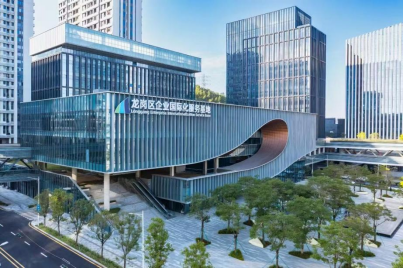
    Longgang district posted a comprehensive cross-border e-commerce index of 139 in Q2 2026, a quarter-on-quarter uptick. Its core indicators continue to lead the country, cementing its status as China's top cross-border e-commerce hub amid widespread industry pressure.Longgang serves as a professional international service base.Longgang delivered standout trading results. Its cross-border e-commerce gross merchandise volume surged 12.1 percent year-on-year in Q2, while order volume grew 8.7 percent, outpacing other regions nationwide by 2.6 and 1.5 percentage points respectively. Local merchants contributed 21.9 percent of the country's total cross-border GMV and 24.8 percent of cross-border orders, with both ratios climbing from Q1. Notably, average GMV and order volume per local seller rose 15.3 percent and 11.7 percent quarter-on-quarter respectively, to 1.58 and 1.78 times the national average. The growth stems from improved operational efficiency among existing merchants rather than from an increase in the number of sellers.The district's cross-border e-commerce ecosystem support index jumped 18.9 percent quarter-on-quarter to 129.58 in Q2. Its artificial intelligence penetration rate reached 62 percent, well above the national average of 51 percent, and its talent reserve index stood at 150. Local enterprises widely adopt a multi-platform, multi-store operation model, partnering with an average of 1.6 platforms and running 23.8 stores per firm, well above national benchmarks. This diversified layout creates a buffer against risks posed by reliance on a single marketplace.Targeted government services have provided robust backing for industrial growth. Longgang set up the first Chinese cross-border e-commerce division under a district-level bureau of commerce, inaugurated a special task force for high-quality cross-border e-commerce development, and launched a dedicated service hotline. The district unveiled the nation's first district-level cross-border e-commerce development index and a three-year action plan at its cross-border e-commerce conference in April. Leading platforms, including Alibaba 1688 and Hugo Cross-border, held strategic launch events in Longgang in May. The district's industrial magnetic effect continues to strengthen, drawing constant inquiries and relocation applications from enterprises across the country.

    APEC ministers vow to balance economic growth and ecology

    07-29,2026

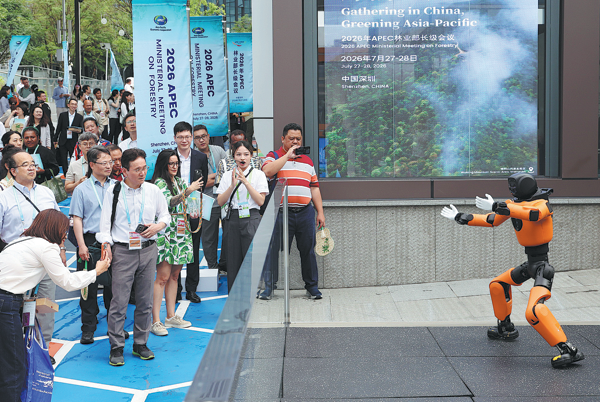
    Participants of the 2026 APEC Ministerial Meeting on Forestry watch a robot performance in Shenzhen, Guangdong province, on Monday.APEC forestry ministers agreed on Tuesday to strengthen biodiversity protection, improve forest governance and boost investment in the forestry sector to advance sustainable development.The two-day meeting in Shenzhen, Guangdong province, brought together senior officials and experts from 21 Asia-Pacific Economic Cooperation economies and seven international organizations. It was the first APEC ministerial-level conference on ecological issues hosted by China in 15 years.The meeting concluded with a joint statement urging APEC economies to integrate sustainable forest management into economic development plans with the aim of strengthening biodiversity protection and combating the illegal timber trade.The statement encourages economies to expand forestry investment in line with their national circumstances, upgrade timber processing industries, strengthen cooperation on urban forestry and water management across the Asia-Pacific, and use technology to support ecosystem restoration.It also calls for the development of emerging forest-related industries, products and services that are aligned with the principles of sustainable forest management.Addressing the meeting, Vice-Premier He Lifeng said China has long prioritized ecological civilization and actively fulfilled its commitments to global environmental initiatives.While maintaining robust economic growth and long-term social stability, China has forged a development path that balances economic progress with ecological conservation, he said.Official figures show China contributes 25 percent of the world's newly added green areas and has achieved its 2030 national forest stock growth target ahead of schedule.He noted that China remains committed to strengthening forestry cooperation across the Asia-Pacific region and promoting a fairer and more inclusive global ecological governance system.According to the National Forestry and Grassland Administration, China has supported more than 50 forestry demonstration projects in over 20 APEC economies, providing more than $45 million in funding and restoring more than 1,300 hectares of degraded land to help revitalize regional ecosystems.Delegates shared experiences and best practices in forestry conservation and regional cooperation during the meeting.Jenny Cameron, head of the New Zealand delegation, said market-based incentives, strict harvesting controls and innovation in the bioeconomy have helped increase New Zealand's forest cover by more than 10 percent since 1990.She said China and New Zealand share extensive cooperation in forestry and mangrove conservation, including collaboration on bird migration research and plant conservation. To promote sustainable forestry development in the Asia-Pacific region, she said, economies should work together to curb illegal timber trade and build resilient supply chains for forest products because of their significant environmental and social impacts.Song Won Yeong, a representative of the Korea Forest Service, praised China's achievements in expanding forest coverage and restoring degraded woodland, particularly its landmark shelterbelt program in northern regions to curb desertification.He said the Asia-Pacific region's vast territory and diverse climatic conditions support a wide variety of forest ecosystems. While this diversity presents challenges for regional forest management, it also creates opportunities for tailored approaches suited to local conditions.Tse Chin-wan, secretary for environment and ecology of the Hong Kong Special Administrative Region government, told China Daily that balancing rapid economic development with forest and ecosystem conservation remains a major challenge for the Guangdong-Hong Kong-Macao Greater Bay Area.He said Hong Kong will work closely with mainland cities to strengthen ecological conservation. Besides cooperating on wetland and mangrove protection, Hong Kong and Shenzhen will continue advancing the construction of a cross-boundary ecological corridor in the eastern border area to facilitate wildlife movement and enhance biodiversity.

    Innovation meets Hakka heritage in Longgang for foreign visitors

    07-28,2026

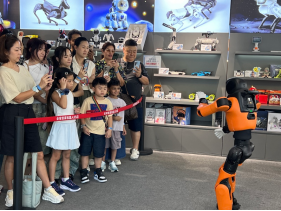
    Exclusive cultural tourism activities for international visitors debut in Longgang from July to November for pre-registered foreign tour groups. Visitors may enjoy interactive robot displays and hands-on Hakka intangible heritage crafts. Integrating advanced tech with age-old Hakka ancient towns, the programs let overseas travelers experience dynamic Shenzhen's perfect mix of innovation and cultural warmth.The Longgang Robot 6S Store features smart robot exhibits. More than just an exhibition venue, it serves as a comprehensive industrial window, linking technological R&D, product display, leasing services and scenario application.A 15-minute featured robot performance is staged on-site.Gankeng Hakka Town, a national 3A-level tourist attraction, retains complete Hakka alleyways and traditional residential architecture. Foreign visitors may book workshops to make mugwort massage hammers, herbal sachets and wooden chopsticks. Participants select raw materials and complete all crafting procedures by hand. The handmade works become one-of-a-kind travel souvenirs.Overseas visitors take group photos during their cultural tour of Gankeng Hakka Town in Longgang.The integration of the sci-tech industry and Hakka culture forms Longgang's distinctive cultural tourism signature. Travel agencies may flexibly combine itineraries based on group duration and interests. Longgang provides diversified, themed cultural tourism routes tailored for family travelers, youth study tours, business exchange delegations and cultural enthusiasts.

    28th Asian Youth Chess Championships conclude in Shenzhen

    07-27,2026

    The 28th Asian Youth Chess Championships wrapped up in Longgang district, Shenzhen province on July 24. Nearly 1,000 young chess players from 30 Asian countries and regions waged intellectual battles across the chessboard. In this young and open city, they forged friendships and created lasting memories.As one of Asia's largest and highest-level tournaments for young chess talents, the event featured three categories: classical, rapid and blitz chess. Competitors were split into six age groups: U8, U10, U12, U14, U16 and U18. Each age bracket contained Open and Girls sections, generating a total of 108 individual medals.The tournament venue witnesses intense intellectual contests and friendly exchanges among young chess players.In the 12 sections of the rapid competition, China claimed four golds, four silvers and three bronzes to emerge as the biggest winner. Vietnam took two golds, four silvers and two bronzes, while Kazakhstan secured two golds and two bronzes.The classical tournament ran over nine rounds. Chinese players earned two golds, three silvers and two bronzes. Zhu Jiahe claimed gold in the Girls U10 division and Tong Yiyi won the Girls U16 title.On the classical medal table, Russia topped the rankings with three golds, one silver and two bronzes; Vietnam followed with two golds, four silvers and four bronzes.In accordance with the Title Regulations of the International Chess Federation, Chinese players Zhang Ruike, Jin Yuxin and Guo Ziming qualified for direct Candidate Master titles. Tong Yiyi earned a Woman International Master norm. Zhu Xianshuo, Zhu Jiahe and Peng Jingyi obtained eligibility for direct Woman Candidate Master titles.Vietnam delivered the strongest performance in blitz contests, pocketing three golds, five silvers and two bronzes. Russia secured three golds, two silvers and one bronze. China claimed three golds and one bronze. Kazakhstan earned two golds, one silver and two bronzes. And Australia took one gold and one silver.Russia, Vietnam and China finished as the top three recipients of the Best Federation Awards.Tulga Tserengavaa, an international arbiter from Mongolia, spoke highly of the event's professionalism and hospitality. "As an arbiter, I look forward to fair and exciting competitions," he said. The arbiters strictly observed tournament rules to ensure a positive playing experience for every participant.

    Longgang's AI visual creativity White Paper takes center stage at WAIC

    07-20,2026

    The AI-enabled Advertising and Marketing Innovation Forum of the 2026 World Artificial Intelligence Conference (WAIC) was held at the West Bund International Convention & Exhibition Center in Shanghai on July 19.Huamin (left), founder of the AI Creators Alliance, and Luo Cheng (right), chief advisor of the Global AI Visual Creativity Competition (VACAT Awards) and an AI content creator, pose together at the forum.Back in October 2025, the country's first White Paper on AI Visual Creativity Applications (2025) was unveiled at the 2nd Longgang Global AI VACAT Awards, filling a void in systematic research on AI visual creativity applications in China. The 2026 edition has traveled from the Longgang competition venue to the World Artificial Intelligence Conference, and will make its full debut at the 3rd VACAT Awards.According to Luo Cheng, over 8,000 global submissions and a massive community of creators accumulated across the first two VACAT editions form a solid practical foundation for the white paper.Findings from the VACAT Awards are showcased at the World Artificial Intelligence Conference(WAIC).Jointly compiled by the competition's organizing committee and Lumier. AI, China's largest AIGC creator community, the document is China's first industry guide offering systematic insights into AI visual creativity applications. It comprehensively sorts out the industry’s development landscape, core bottlenecks and future trends, aiming to steer the sector from exploratory experimentation toward standardized, mature growth.The white paper features extensive first-hand practical data, including comparison tables for mainstream AI video tools covering core areas such as functionality, enterprise applicability and cost performance, all repeatedly verified by professional film and television studios.The VACAT Awards continuously supplies rich materials for the white paper, while the white paper in turn guides creators to craft higher-quality works. The two advance hand in hand in a mutually reinforcingupward spiral.Calls for submissions to the 3rd 2026 Global AI VACAT Awards launch on July 10, with global entry channels available worldwide via Douyin.Focusing entirely on artificial intelligence, the competition evolves its categories annually to match shifting AI media carriers, making the awards a pure chronological record of AI's evolving media forms. Longgang has built a fully native, AI-original awards platform.

    Longgang advances low-altitude economy with new aerial corridors

    07-17,2026

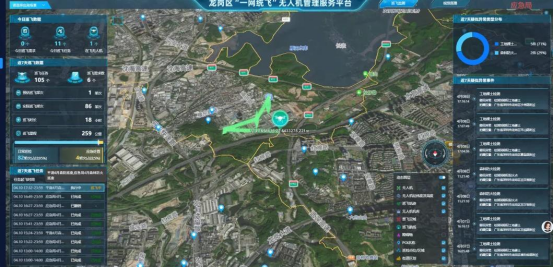
    Shenzhen's Longgang district made solid progress in developing its low-altitude economy during the first half of the year by strengthening policy support, expanding real-world applications, attracting industry investment and hosting major events.A formation of 4,500 drones creates the world's first dynamic 3D aerial light-and-shadow track that draws massive online attention.On March 27, the 2026 Longgang Low-Altitude Economy Innovation Development Conference and FPV Drone Racing Challenge was inaugurated, showcasing Longgang's low-altitude applications and brand outreach work in H1.A centerpiece of the event, the Low-Altitude Economy Innovation Development Conference featured themed exhibitions, technical matchmaking and safety drills. Longgang showcased its technical prowess in formation flight and low-altitude security, facilitated China's first-ever low-altitude public data transaction, and simultaneously released 81 low-altitude industry needs from paired assistance regions spanning seven sectors, including intelligent airspace coordination, emergency rescue, agriculture-tourism integration, low-altitude logistics, and cultural tourism.Longgang seals landmark cooperation agreements with Huawei, Cenglin Capital and the Low-Altitude Economy Branch of the IDEA Research Institute, as well as local firms such as Kunxiang Aviation, which secured major national orders.The Low-Altitude Economy Industrial Investment Fund was unveiled alongside the inauguration of the Low-Altitude Safety Equipment Industrial Consortium. These moves accelerate the creation of a low-altitude ecosystem integrating technology, real-world applications, capital and industrial players, positioning Longgang as a national benchmark demonstration zone for low-altitude industrial ecosystems.Longgang has broken cross-departmental silos by coordinating flight resources across 28 government agencies. Following the completion of China's first low-altitude public data product transaction, the district established standardized operating procedures and an end-to-end system for collecting, verifying data rights and trading data related to fire prevention, illegal construction, river monitoring and other aspects of urban management.The smart large-screen comprehensive monitoring interface displays Longgang's One-Net Unified Flight UAV management and service platform.The Aerial Transport Corridor System has rolled out plans for five test routes, prioritizing three core operational tracks: industrial logistics, public services and government administration. Additional applicationsin areas such as emergency supply delivery and cultural tourism shuttle services will be gradually expanded.

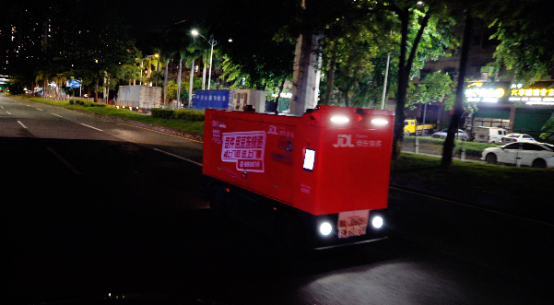
    Longgang pioneers new smart logistics model with night auto delivery vehicle

    07-16,2026

    Longgang district has put in place an efficient intelligent logistics model featuring daytime last-mile delivery and nighttime warehouse network replenishment. From full-district road right opening to multi-scenario application and infrastructure empowerment, the district has built a benchmark for intelligent logistics through all-round innovation, continuously fueling the high-quality development of Shenzhen's smart city initiative.JD Logistics runs almost 100 autonomous delivery vehicles across Shenzhen, with nearly 40 operating in Longgang district.Under the guidance of Shenzhen Municipal Transportation Bureau, Longgang took the lead in fully opening nighttime road rights for functional autonomous vehicles across the district, effectively tackling long-standing industry pain points including saturated daytime traffic flow and constrained capacity for autonomous deliveries.After two years of on-site trial operation and refinement, the district released a complete set of administrative measures for autonomous vehicles in July, establishing full-process norms covering vehicle access, road passage, safety supervision and operational support.On March 26, a municipal-level policy granted cross-district freight passage rights for autonomous vehicles in Pingshan and Longgang districts from 10 pm to 6 am daily. Policy dividends rapidly translated into industrial growth: within merely three months, the number of nighttime autonomous delivery routes citywide jumped from an initial two to 331, with over 100 vehicles deployed. Total nighttime driving mileage exceeded 40,000 kilometers in June.Longgang has also rolled out supporting infrastructure and pioneered a collaborative system for autonomous logistics with local state-owned enterprises. The district led the integration of eastern bus groups with logistics and autonomous vehicle firms, renovating existing bus stations to build exclusive charging and refueling depots and regional transit hubs for autonomous vehicles. This enables the multi-purpose station utilization and unified administration of logistics resources, ensuring the round-the-clock stable operation of autonomous vehicles.By day, autonomous vehicles mainly handle cargo transshipment within subdistricts: couriers depart with primary batches of goods for door-to-door delivery, while remaining parcels are transported to subdistrict stations in batches by autonomous vehicles. This completely resolves past bottlenecks such as limited single-load capacity and frequent return trips to replenish inventory at service outlets.Off-peak nighttime operation has generated substantial multiplier effects for the logistics sector. Single-vehicle operating costs dropped by roughly 20 percent, and capacity utilization rose by 66 percent. Improved efficiency ultimately benefits consumers across the city.